
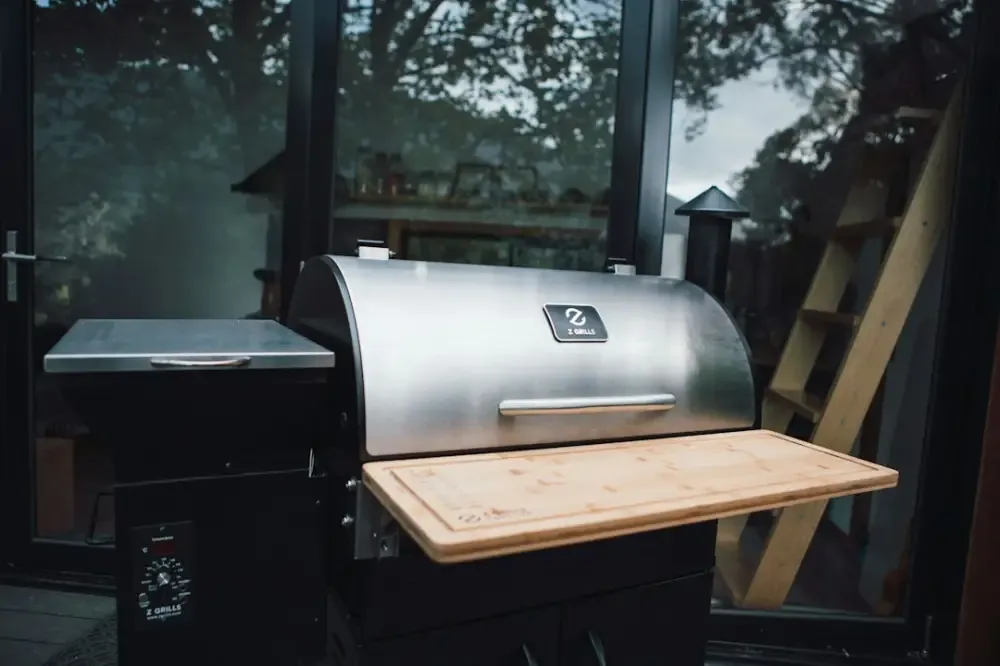
The Myth of the High-Priced Pit
Walking into a BBQ supply store or browsing online forums can be an intimidating experience for a beginner. You see gleaming stainless steel rigs, trailers with custom offsets, and high-tech pellet grills with Wi-Fi connectivity that cost more than a used car. It is easy to fall into the trap of thinking that the quality of your brisket is directly proportional to the size of your investment.
However, here is the practical truth: your first smoker doesn't actually need to be expensive. In fact, starting with a budget-friendly smoker might actually make you a better pitmaster in the long run. At 1848 BBQ, we believe the craft is in the technique, the patience, and the flavor profile—not just the price tag on the equipment.
Mastering the Fundamentals of Fire and Air
When you buy a high-end, fully automated smoker, you are often paying for the machine to do the work for you. While that is convenient, it skips the most important part of the learning process: understanding how airflow, fuel, and temperature interact. A simpler, more affordable smoker requires you to be 'hands-on.'
By using a basic charcoal smoker or a versatile kettle grill, you learn how to manage a fire. You learn how opening a vent by just a quarter-inch can raise the temperature by ten degrees, and how the weather outside affects the metal of your cooker. These are fundamental skills that stay with you forever. If you start on an expensive 'set-it-and-forget-it' machine, you might get a decent result, but you won't necessarily understand *why* it worked.
The Best Budget-Friendly Entry Points
If you are looking to get into the hobby without breaking the bank, there are several styles of smokers that provide incredible value. You don't need to spend four figures to get competition-quality bark and smoke rings.
- The Classic Kettle Grill: Perhaps the most underrated smoker in the world. With a simple 'snake method' charcoal arrangement, a standard kettle grill can maintain a steady 225°F for hours, allowing you to smoke pork butts and ribs with ease.
- The Bullet Smoker: These vertical water smokers are affordable and highly efficient. They use a water pan to regulate temperature, making them very forgiving for beginners.
- The Drum Smoker: Often referred to as 'Ugly Drum Smokers' (UDS), these are essentially metal barrels converted into cookers. They are famous for their rock-solid temperature stability and are a favorite among DIY enthusiasts.
- Electric Smokers: If you are nervous about managing charcoal, an entry-level electric smoker is a practical way to learn about wood chip flavors and internal meat temperatures without the stress of fire management.
Why the 'Snake Method' Changes the Game
For those starting with a simple kettle grill, the snake method is a revolutionary technique. By lining up unlit charcoal briquettes in a semi-circle around the edge of the grill and lighting only one end, the fire slowly 'travels' around the ring. This provides a consistent, low heat for 8 to 12 hours without needing to refill the fuel. It is a prime example of how technique can overcome the limitations of inexpensive gear.
Invest in Tools, Not Just the Rig
If you have a budget of $500 for your new hobby, you shouldn't spend all $500 on the smoker itself. A practical approach is to spend $200–$300 on a reliable entry-level smoker and use the remaining money for tools that actually impact the quality of the food. The right accessories will do more for your BBQ than a slightly thicker gauge of steel on your smoker ever will.
- A High-Quality Instant-Read Thermometer: This is non-negotiable. Knowing the exact internal temperature of your meat is the difference between a juicy brisket and a dry one.
- Dual-Probe Remote Thermometer: One probe monitors the grill's temperature at the grate level, and the other stays in the meat. This allows you to monitor the cook from inside your house.
- A Chimney Starter: Stop using lighter fluid. A chimney starter is a cheap, effective way to get your charcoal glowing in minutes using only a piece of newspaper.
- Quality Fuel and Wood: Spending a little extra on high-quality lump charcoal or seasoned hardwood chunks will provide a much cleaner flavor than the bargain-bin options.
Lowering the Stakes of the Learning Process
There is a psychological benefit to starting small. When you have a $2,000 smoker sitting in the backyard, you feel a massive amount of pressure to produce a perfect meal every time. This pressure can take the fun out of the hobby. If you make a mistake on a budget-friendly rig, it feels like a low-stakes learning experience.
BBQ is a journey of trial and error. You will likely over-smoke a chicken or pull a pork shoulder too early at least once. When you start with an affordable smoker, you allow yourself the grace to experiment, fail, and eventually succeed. Once you have mastered the art on a basic machine, you will truly appreciate the features of a premium smoker if you ever decide to upgrade.
Final Thoughts for the Aspiring Pitmaster
The best BBQ isn't made by the most expensive machine; it’s made by the person who understands their cooker, knows their meat, and has the patience to let the smoke do its work. Start small, focus on your technique, and invest in good thermometers. You’ll be surprised at how quickly you can produce world-class BBQ on a budget. Remember, the smoke doesn't know how much you paid for the grill—it only knows how you manage the fire.